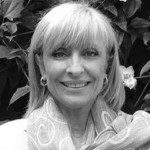
Dr Peyraube is Medical Doctor and specialist in the field of Drug Policy and Cannabis for Medicinal purposes. Throughout her career she has been involved in training, prevention, treatment and drug related harm reduction, including innovative theoretical and methodological developments with an emphasis on ethical issues, which earned her regional and international recognition. She has been advocating for drug policy reform in several countries.
In her home country, Uruguay, she has been ad hoc advisor to the National Board on Drugs (SND) in the reform of the public drug policy and the Institute of Regulation and Control of Cannabis (IRCCA) of Uruguay, and actively participated in the drafting of the law that regulates Cannabis for all purposes.
Racquel is a member of the International Association for Cannabinoid Medicines (IACM) and of the group of experts working on the public health recommendations for Cannabis regulation, coordinated by the O’Neill Institute of the Georgetown University, Washington DC, and the Washington Office for Latin America (WOLA).
Dr Peyraube is the designer and academic coordinator of the 1st International Medical Cannabis Course for physicians and nurses endorsed by IACM, a protocol designed to be implemented in different contexts. Also, she is scientific advisor to foundations and companies working in the field of medical Cannabis who are interested in developing clinical trials and public education.
In May 2017 she founded the Uruguayan Society of Endocannabinology and is its founder president. Currently she is dedicated to Cannabis medicine practice, the development of protocols for clinical trials for research, medical cannabis education for health professionals, and consulting on Drug Policy Reform, particularly Cannabis legalization in different countries.

 The NDMP seems to be a cut and paste of it’s predecessor, the 2012- 16 NDMP. The present policy document seems to have been rushed through parliament to coincide with international Crime Day in June 2013. Maybe electioneering has something to do with the speed at which the document was published. From what we can understand, the only major changes are in fact to alcohol policy. Foetal Alcohol Syndrome is a problem among alchohol addicts which this document tries to address.








Interesting article on IOL: SA plan calls for study on legalising dagga.
On Monday the Cape Times quoted Gareth Newham, the head of the Institute for Security Studies’ crime and justice programme, and criminologist Liza Grobler as saying decriminalising drugs would weaken gangs as their main source of power and income would be ruined.
Newham said if dagga were decriminalised, police could focus their resources and clamp down on harder drugs.
But the master plan said the stance towards dagga, in South Africa and other countries, had since changed and further research become necessary.
“There is a need for an in-depth investigation of the dynamics of (dagga) use and related harm in South Africa, as well as the relevance of current international/local policies regarding (dagga) use, including measures such as legalisation and/or decriminalisation,” the master plan said.
“The results of this investigation should then be used to develop government policies, legislation, protocols and practices related to (dagga) use.”
Interesting how the words use and abuse are freely interchangeable in this document. All in favour of some form of treatment/help for abusers but responsible use is another thing.