
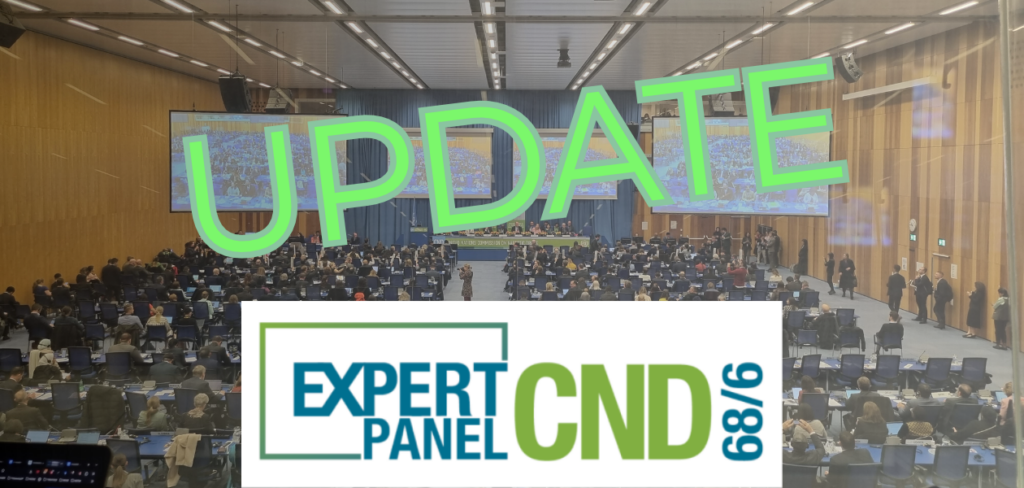
Civil society speaks out on the future of international drug policy.
How many times have we heard from South African government officials that our obligations under the international drug control conventions prevent meaningful Cannabis law reform? Recently, we now had the opportunity to challenge this narrative at an international level.
In 2025, the United Nations Commission on Narcotic Drugs (CND), through Resolution 68/6, established a multidisciplinary panel of 19 independent experts to examine the implementation of the international drug control conventions, other relevant international instruments and drug policy commitments. The deadline for written submissions was 15 November 2026, with the Panel expected to present its recommendations in 2027, informing the broader review of international drug policy commitments in 2029.
Fields of Green for ALL’s Submission
Cannabis Law Reform at the Intersection between Drug Control and Human Rights Obligations
A century after South Africa played an instrumental role in placing Cannabis under international control, we find ourselves caught between our constitutional rights and our government’s interpretation of international obligations. Our submission highlights the continued criminalisation of our Cannabis community, the exclusion of traditional cultivators, legislative inertia and the devastating consequences of punitive policing, drawing on our ongoing Police Reform Project.
Importantly, we challenge the tendency to consider the drug control conventions in isolation from other international instruments protecting Human Rights, Indigenous Knowledge, Biodiversity, Cultural Heritage and Sustainable Development.
We call for greater clarity around treaty flexibilities, renewed scientific evaluation of Cannabis scheduling, restorative justice and greater accountability within the International Narcotics Control Board (INCB).
International obligations should facilitate, rather than obstruct, meaningful reform.
Voices from South Africa
We are delighted to share contributions from our South African allies, whose experiences complement our advocacy across the Cannabis sector and broader drug policy reform movement.
Shaun Shelly – Our colleague on the Police Reform Project challenges the use of arrests and seizures as indicators of successful drug policy.
Marleen Theunissen – Mpondoland Plug Project – Writing in her personal capacity, Marleen brings invaluable grassroots experience of the practical barriers facing rural and legacy Cannabis cultivators.
Equal International – Fellow advocates in the Cannabis Crisis Coalition highlight the devastating consequences of regulatory failures for patients requiring access to Cannabis medicines.
SACHIDA – The South African Cannabis and Hemp Industry Development Association advocates for inclusive economic development, recognition of constitutional rights and accessible regulatory frameworks.
Voices from Our International Allies
Attach pdfs of each to replace the links here:
Our work extends far beyond South Africa’s borders. These submissions demonstrate the breadth of international expertise informing our collective advocacy.
Cannabis Embassy – Co-authored by FGA director Myrtle Clarke, this contribution calls for legal certainty, coherence and equitable access under the existing conventions.
Open Society Foundations – Supporters of our Police Reform Project call for fundamental reassessment of prohibition and evidence-based alternatives.
HRI Expert Panel Submission– Our allies in the global harm reduction movement advocate for sustainable funding, decriminalisation and rights-based healthcare.
Veterans Action Council– Advocates for veterans’ access to plant-based medicines call for fundamental treaty reform and the removal of traditional plants from international schedules.
ENCOD – European Coalition for Just and Effective Drug Policies – Our European allies submitted two complementary contributions addressing treaty flexibility and evidence-based regulation and the institutional separation of drug policy from crime prevention within the UN.
International Centre on Human Rights and Drug Policy– Examines the intersections between drug control and international human rights obligations.
Eastern and Southern Africa Commission on Drugs – Brings an important regional perspective, advocating alternatives to incarceration and punitive drug policies.
ICEERS – Advocates for legal certainty surrounding traditional plants and plant-based preparations, particularly within Indigenous medicine systems.
From Grassroots to Global Policy
We encourage our community, government officials and everyone involved in Cannabis law reform to read these submissions.
While our approaches may differ, a common thread runs through these contributions: international drug policy must serve people, not perpetuate their suffering.
The voices of civil society are essential to this process. We look forward to engaging with the Expert Panel and ensuring that the lived experiences of our Cannabis community are heard.
Nothing about us without us!






Leave A Comment